 AI Automation
AI Chatbot for Small Business Customer Service: Buy or Build?
Choosing an AI chatbot for small business customer service: real prices for Intercom, Tidio, Zendesk and more, when a custom bot on your docs is worth it.

By Taegan Murphy, Founder, MintLooks
8 min read
In this article
- What does an AI chatbot for customer service do?
- Chatbot for small business: off-the-shelf options compared
- Off-the-shelf or a custom chatbot trained on your data?
- What does "trained on your data" mean?
- How much does an AI chatbot cost?
- How to keep a customer service chatbot from making things up
- A real build: the RAG chat in BNB Analytics
- How to get started
- Frequently asked questions
The right AI chatbot for small business customer service answers from your own help docs and policies, shows where each answer came from, says when it doesn't know, and hands off to a person. For most small businesses, an off-the-shelf tool at roughly $20 to $120 a month (plus per-answer fees on some plans) is the place to start. A custom chatbot trained on your data, typically $5,000 to $12,000 to build, makes sense when answers live across several systems or the off-the-shelf bot keeps getting things wrong.
This guide compares the main off-the-shelf options with their current prices, explains what "trained on your data" really means, and gives a setup checklist that keeps a customer service chatbot from making things up.
What does an AI chatbot for customer service do?
An AI customer service chatbot reads a customer's question in natural language, finds the relevant passage in your knowledge base (help articles, policies, product pages), and writes an answer from it. Good ones also:
- Book appointments, check order status or capture leads by connecting to your booking tool, store or CRM.
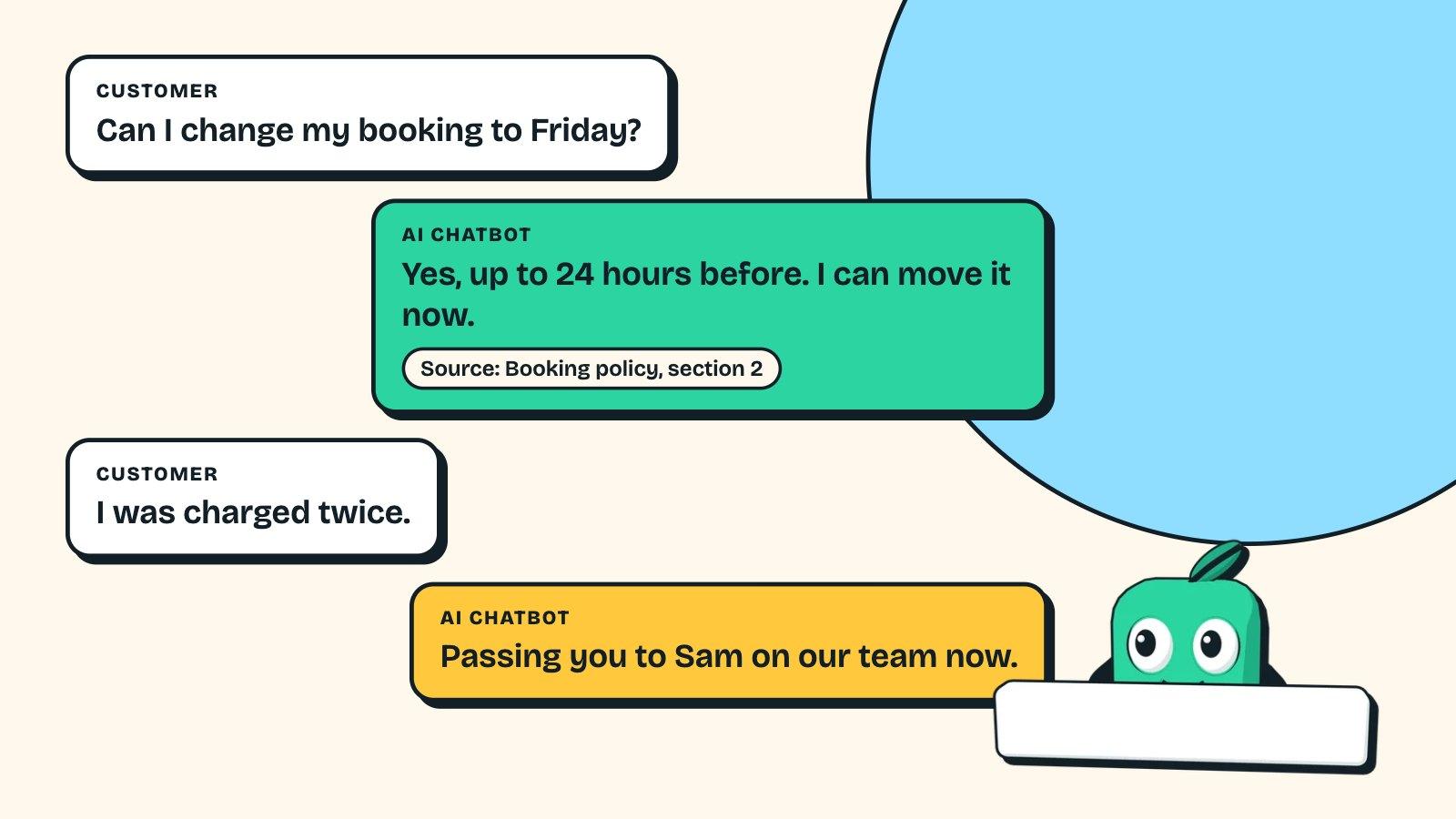
- Hand off to a human agent with the full conversation when the customer is frustrated or the question isn't covered.
- Work across channels: live chat on your website, email, and messaging apps like WhatsApp or Messenger.
- Answer the common questions around the clock, so AI customer support covers evenings and weekends.
What it shouldn't do is improvise. Unlike older scripted FAQ bots, AI chatbots can answer questions they were never given, which is their strength and their risk. The setup decides which one you get.
Chatbot for small business: off-the-shelf options compared
Each of these adds an AI chatbot to your website with a snippet of code or a plugin, alongside live chat for your team. Prices below are from each vendor's pricing page, checked in November 2026. Most quote annual billing; monthly billing costs more.
| Tool | Starting price | How the AI is billed | Good fit |
|---|---|---|---|
| Tidio | Free plan (50 conversations); Starter $24.17/mo billed yearly | Lyro AI agent: 50 conversations included once, then from $32.50/mo | Small online stores and service businesses starting out |
| ChatBot.com | $19 per user/mo billed yearly ($25 monthly) | 10 AI resolutions a month on the first plan; 50 more for $49.50 | Simple website FAQ bots |
| Chatbase | $32/mo billed yearly (700 message credits) | Message credits; $40 per extra 1,000 | A bot trained on your website and documents, no help desk needed |
| Intercom (Fin) | Seats from $19/mo (current new-customer price) | Fin AI agent from $0.99 per resolved outcome | Teams that want a full help desk with an AI agent in front |
| Zendesk | Support Team $19 per agent/mo billed yearly ($25 monthly) | 5 automated resolutions per agent/mo included, then $1.50–$2.00 each | Businesses already handling tickets by email |
Two things the sticker price hides. First, per-resolution pricing (Intercom, Zendesk) means the bill grows with your volume, which is fine when each resolution saves a person time but worth modelling before you commit. Second, the bot is only as good as your help content: if your policies live in someone's head, no tool will answer them well.
Off-the-shelf or a custom chatbot trained on your data?
Start off-the-shelf if most questions are answered on your website or in a help centre, you get fewer than a few hundred chats a month, and the bot only needs to answer, not act.
Consider a custom build when:
- Answers live in several places: PDFs, a shared drive, your CRM, product specs, a scheduling system.
- The bot needs to do things, like look up a customer's order, booking or account, not just quote a help article.
- Accuracy matters more than speed, for example pricing, eligibility or anything regulated, and you need sources on every answer and logs of every conversation.
- The off-the-shelf bot keeps guessing, and you've already cleaned up the content.
A custom AI chatbot typically costs $5,000 to $12,000 to build and $50 to $300 a month to run for a small team (AI usage and hosting, at cost). The AI chatbot service page shows what's included.
What does "trained on your data" mean?
Almost none of these chatbots are trained on your data in the technical sense. They use retrieval: your documents are split into passages and indexed; when a question comes in, the system finds the most relevant passages and gives only those to the AI model with an instruction to answer from them and cite them. This approach is called retrieval-augmented generation (RAG).
That's good news for a small business. Updating the bot means updating a document, not retraining a model, and you can see exactly which passage each answer came from. It also means the quality ceiling is your content: gaps and contradictions in your docs become gaps and contradictions in the answers.
How much does an AI chatbot cost?
| Option | Upfront | Monthly |
|---|---|---|
| Off-the-shelf, low volume | $0 | Free to about $50 |
| Off-the-shelf with an AI agent and help desk | $0 | Roughly $50 to a few hundred, growing with resolutions |
| Custom chatbot trained on your docs | $5,000–$12,000 | $50–$300 (AI usage and hosting) |
For the wider picture of what automation costs and when it pays back, see how much AI automation costs.
How to keep a customer service chatbot from making things up
Whichever route you take, set it up like this:
- Feed it clean sources. One current answer per question. Remove old policies and duplicate pages first.
- Require sources. Every answer should link the passage it came from, so customers and your team can check it.
- Let it say "I don't know". If the docs don't cover a question, the bot should say so and offer a person, not guess.
- Set hand-off rules and say it's a bot. Tell customers up front they're talking to an AI, make a person one click away, and send refunds, complaints, anything about money or health, and any frustrated customer to a human agent.
- Test with real questions. Run 30 to 50 questions your team gets every week, including awkward ones, before it goes live.
- Read the logs weekly. Unanswered questions show you which help articles to write next.
If you can see your own inbox in that list of real questions, that's the place to start. Send a brief with a few of them and we'll tell you whether an off-the-shelf tool will do or a custom build is worth it.
A real build: the RAG chat in BNB Analytics
The closest real example in my own work is BNB Analytics, a DeFi analytics platform I built for the BNB Chain. It's a different industry, but the same machinery: its chat answers questions from live protocol data and an AI-aggregated news feed using retrieval, rather than from whatever the model happens to remember. The same build, pointed at your help docs, policies and order system, is a customer service chatbot.
How to get started
- List the 20 questions your team answers most often, and where each answer lives.
- If most answers are on your website, try an off-the-shelf tool from the table on a free plan or trial first.
- If answers are spread across systems, or the bot needs to look things up, get a quote for a custom chatbot trained on your docs.
The AI chatbot service page has the process, prices and a short brief form. If the bigger problem is everything around the inbox, see 8 workflows small businesses automate first. More guides are in the AI automation category.
Frequently asked questions
What is the best AI chatbot for a small business?
For most, an off-the-shelf tool like Tidio, ChatBot.com or Chatbase; a custom chatbot when answers live across several systems or the bot needs to look things up.
How much does an AI chatbot cost for a small business?
Off-the-shelf plans run from free to about $120 a month plus per-resolution fees on some; a custom chatbot is typically $5,000 to $12,000 to build.
Can I train ChatGPT on my own business data?
Business chatbots use retrieval: they look up your documents and answer from them, so you update a document instead of retraining a model.
How do I build an AI chatbot for customer service?
Gather clean help content, pick a tool or build that answers from it with sources, set hand-off rules, test with real questions, then read the logs weekly.
Will an AI chatbot replace my customer service staff?
It takes the repeat questions; your team keeps refunds, complaints and anything that needs judgement.
How do I add an AI chatbot to my website?
Most tools give you a snippet to paste into your site or a plugin for WordPress or Shopify; a custom chatbot embeds the same way.

Written by
Taegan MurphyFounder, MintLooks
Taegan builds production web apps and AI integrations, including MCP servers, AI agents and automated workflows, for businesses that want software that does real work. MintLooks is the studio behind that work.
Or read how we approach it: AI automation services
Keep reading
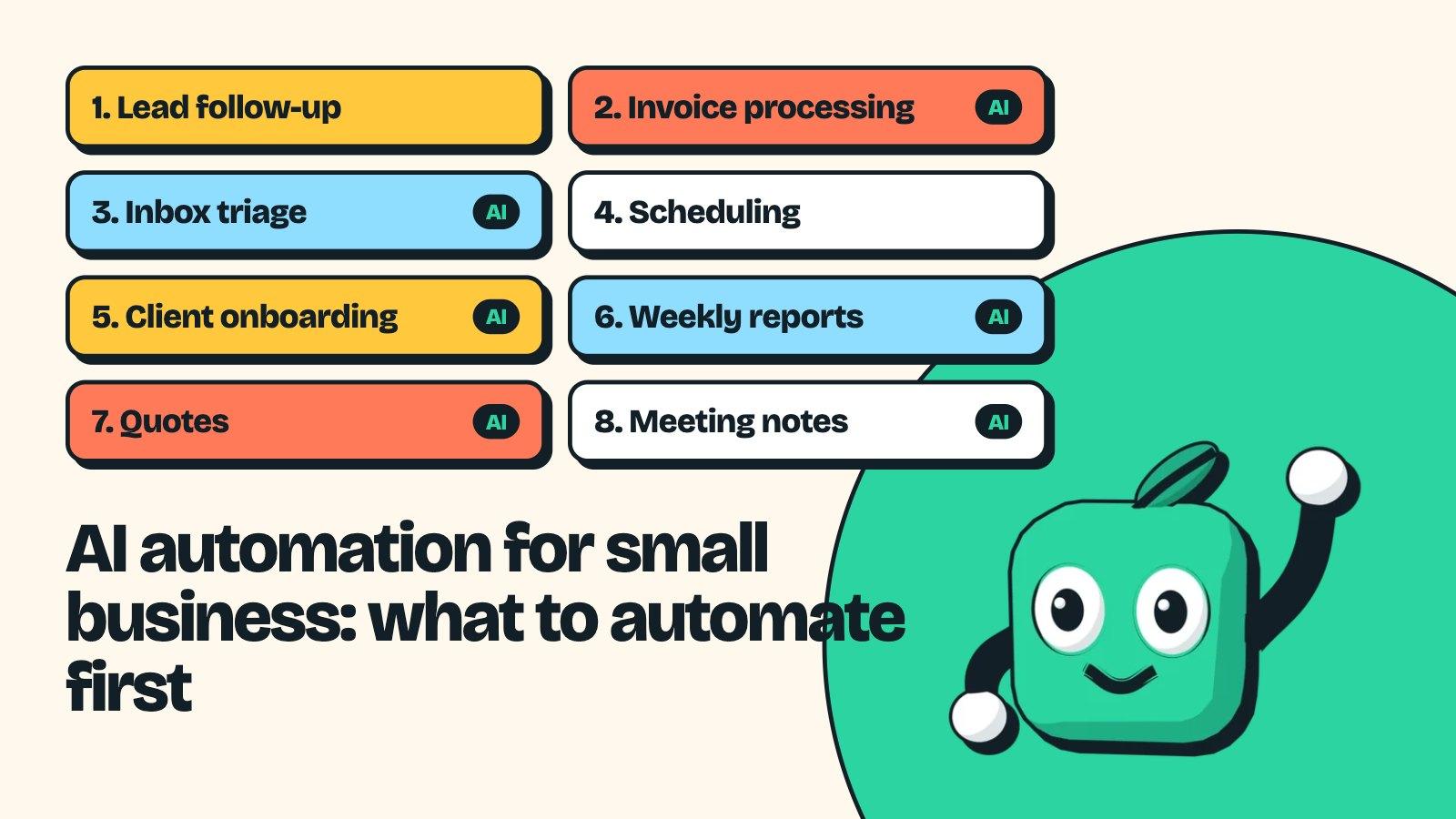
AI Automation for Small Business: 8 Workflows Worth Automating First
AI automation for small business, made practical: 8 workflows worth automating first, which ones need AI, what each costs, and where a person stays in charge.
· 9 min read
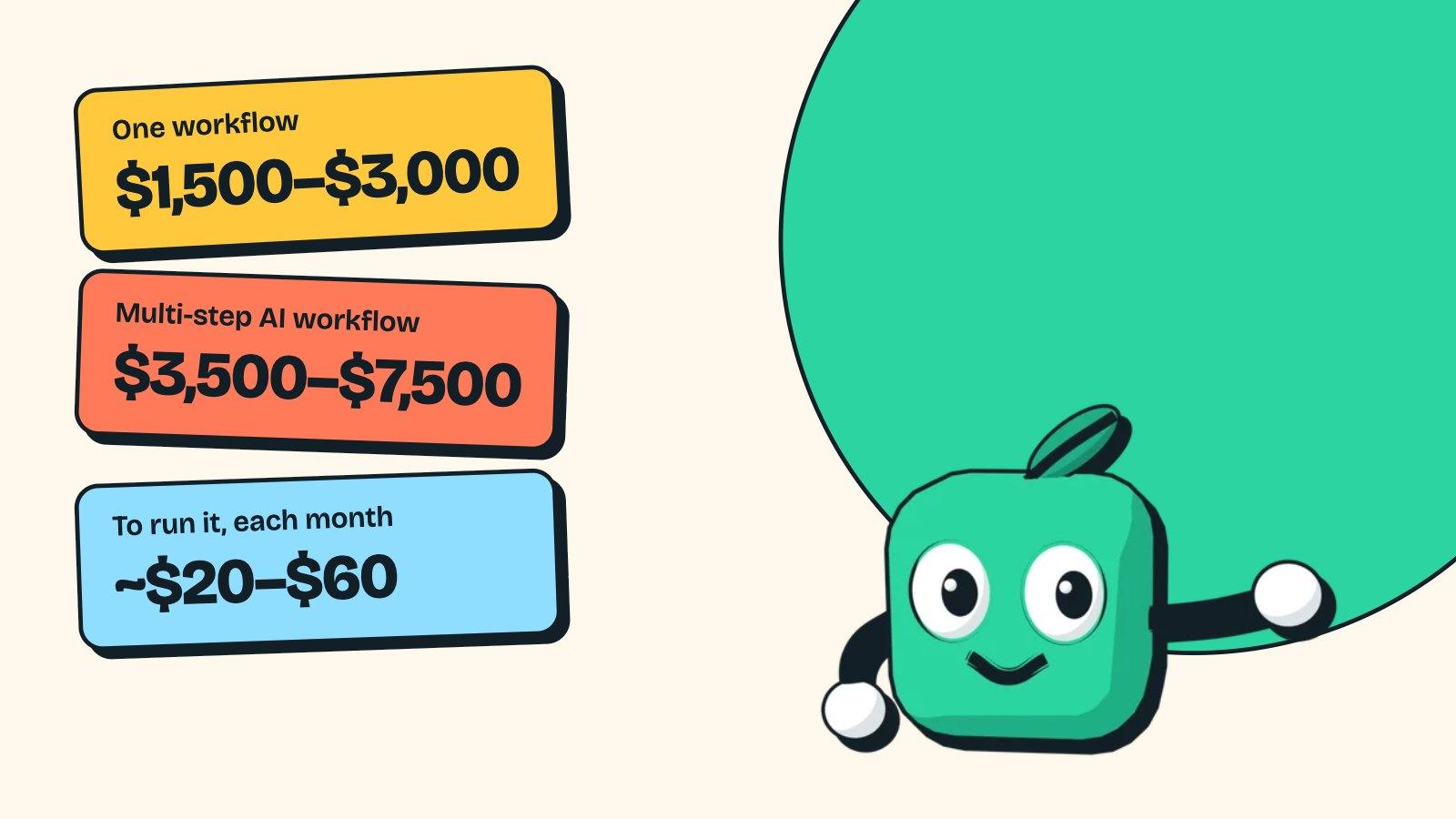
How Much Does AI Automation Cost? Real Prices for Small Businesses
AI automation cost for small businesses: $1,500–$3,000 per workflow, $3,500–$7,500 for multi-step AI, about $20–$60 a month to run. Pricing and payback math.
· 11 min read
Business Process Automation With MCP: A Practical Guide
What MCP changes for business process automation: which workflows to start with, the tools that support it, and the guardrails that keep AI-run processes safe.
· 16 min read