 AI Automation
Missing Calls on the Job? What an AI Receptionist for Small Business Really Costs
AI receptionist for small business: $79 to $270 a month for 150 calls on six AI plans, the calls it shouldn't take, and the $19 text back option.

By Taegan Murphy, Founder, MintLooks
13 min read
In this article
- What does an AI answering service for small business do?
- AI receptionist cost: what 150 calls a month costs on six plans
- Why an AI receptionist bill ends up higher than the plan price
- Is an AI receptionist for small business worth it?
- Which calls should an AI receptionist never take?
- What a good hand-off to a person looks like
- Missed call text back: the cheaper fix
- After hours answering service, AI or a text back: which fits?
- Should I buy an AI receptionist or wait?
- Frequently asked questions
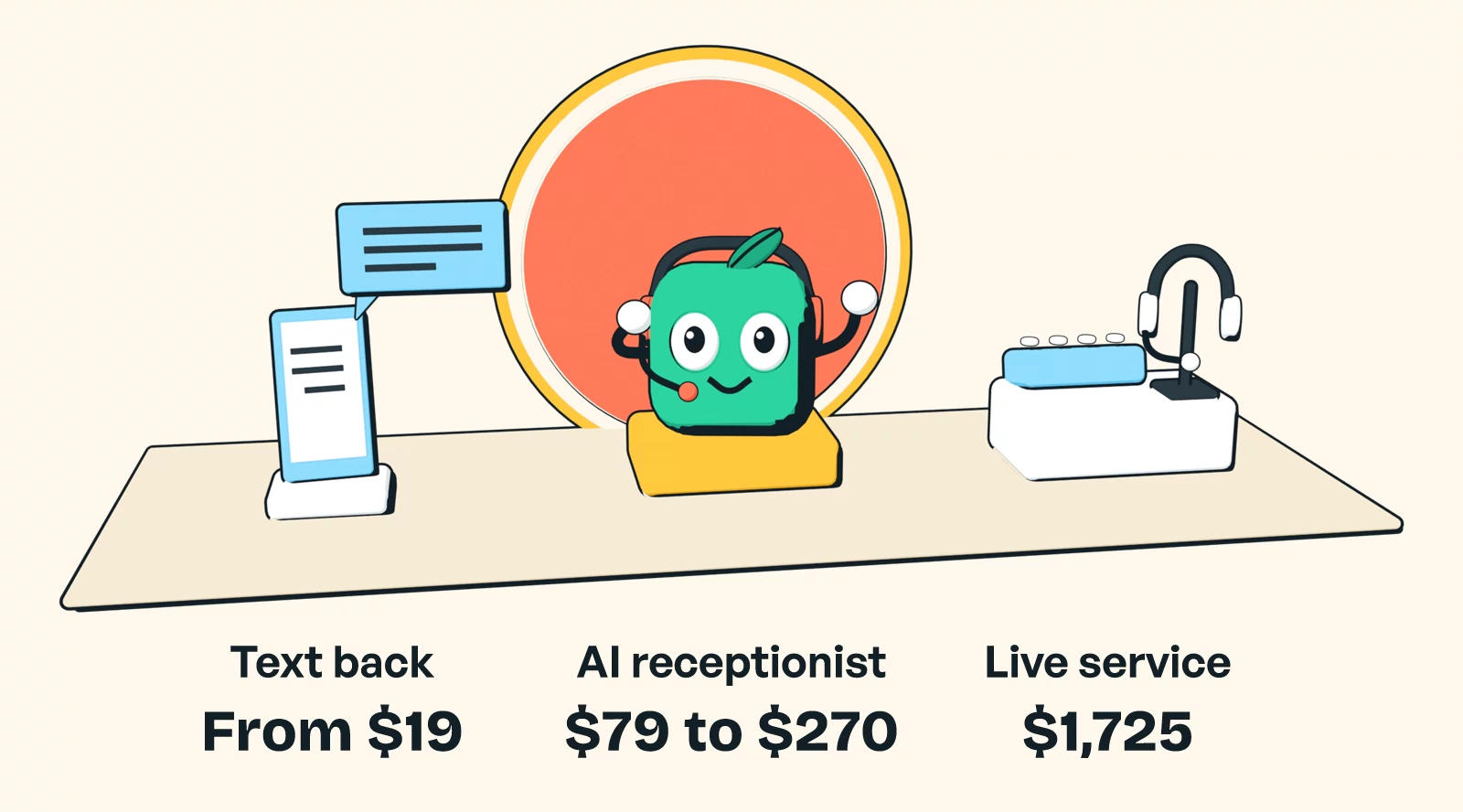
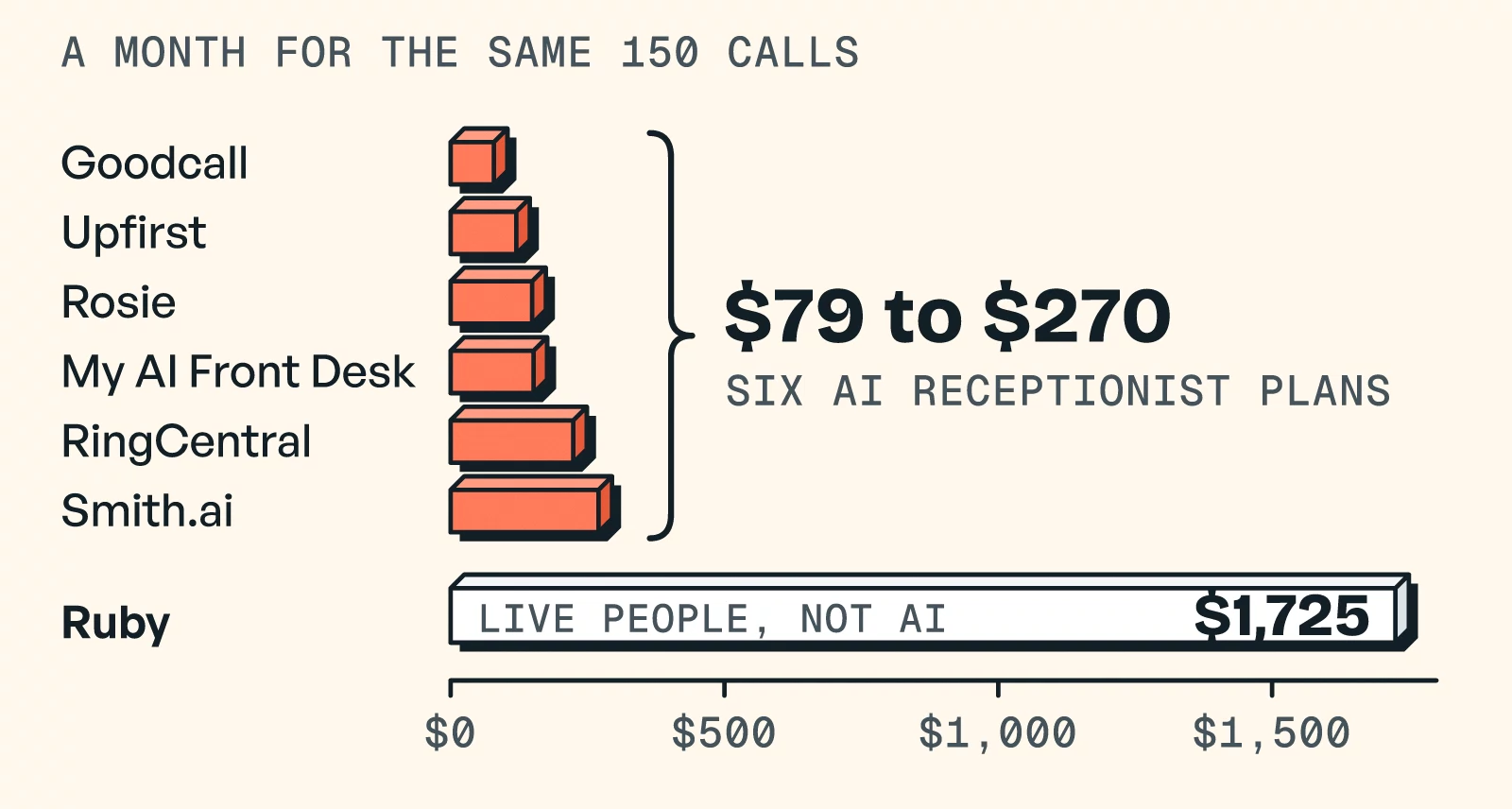
How much does an AI receptionist for small business cost? On six AI receptionist plans, priced from each vendor's own page on November 23rd, 2026, 150 calls a month costs $79 to $270 ($0.53 to $1.80 a call). A live service like Ruby charges $1,725 for the same minutes. If you miss calls on the job, a $19 Quo text back can be enough.
The prices are the easy part. Below is why the bill ends up higher than the plan price, which calls an AI should never take, and what a good hand-off to a person looks like. Then the cheaper fix and when it's enough, and how to decide with your own numbers instead of a vendor's.
One thing to know up front: almost every page ranking for this search is written by a company that sells an AI receptionist. MintLooks doesn't sell one. I do build the text-back automation covered near the end, and I say so there.
What does an AI answering service for small business do?
An AI receptionist (also sold as an AI voice agent or virtual receptionist) picks up when you can't. Unlike an old IVR menu ("press 1 for sales"), it answers in a natural voice and asks the caller a few questions: what the job is, where, how soon. Then it can book appointments, text you a summary or transfer the call to a person.
You don't have to change your number to try one. RingCentral says its AI Receptionist works with any business phone system through call forwarding or SIP, so the calls keep coming to the number customers already have.
Some now answer texts too: UC Today reported on November 18th, 2026 that GoTo's AI Receptionist added SMS, WhatsApp and webchat on one knowledge base.
AI receptionist cost: what 150 calls a month costs on six plans
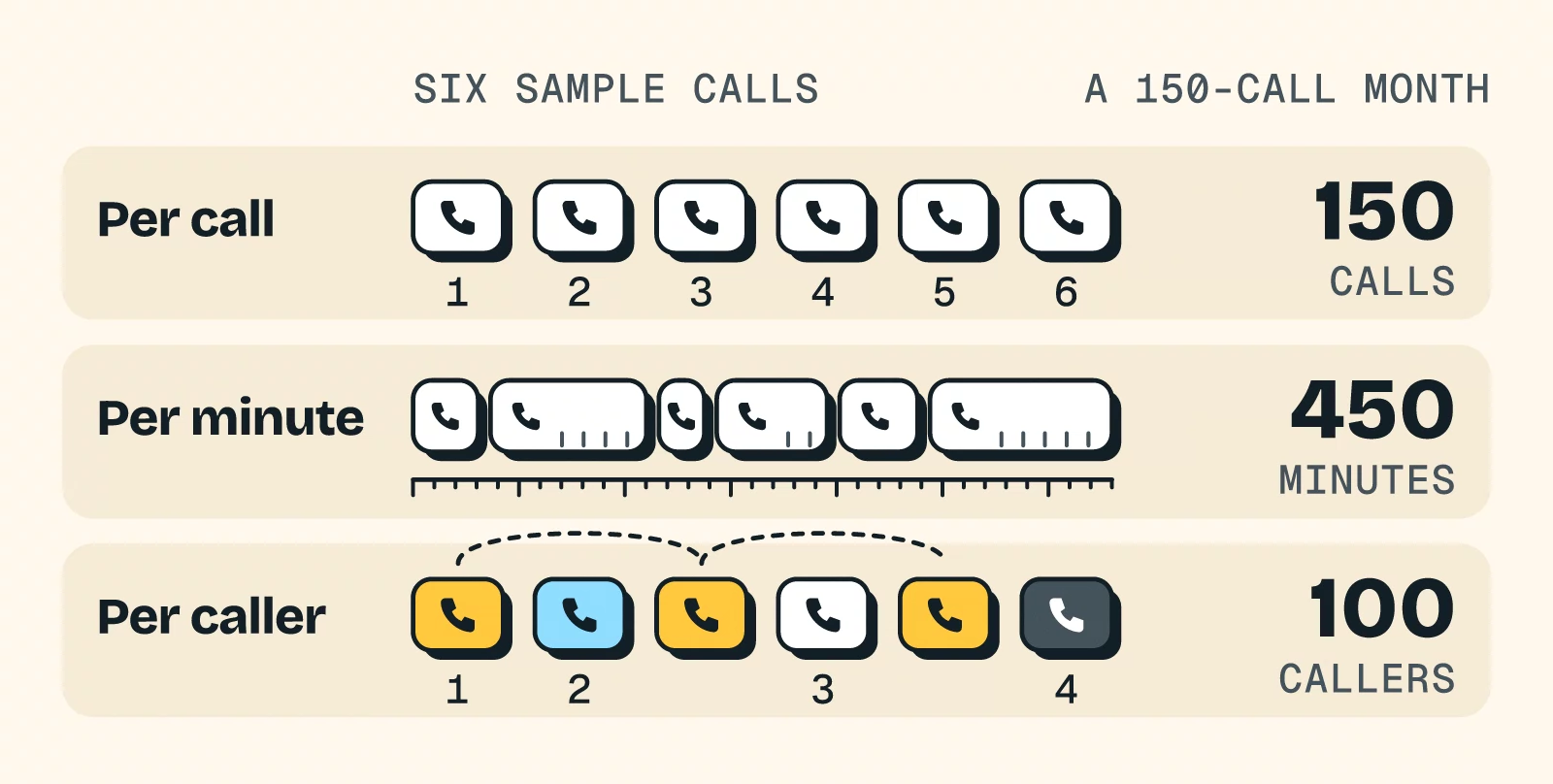
The hard part of comparing AI receptionist pricing is that plans bill in three different units:
- Per call: Smith.ai and Upfirst count each answered call (Quo's AI agent does too, as credits: 100 per call).
- Per minute: RingCentral, Rosie and My AI Front Desk count minutes on the line.
- Per caller: Goodcall counts unique customers, so a customer who calls three times counts once.
To put them side by side, here is one month priced on each vendor's own pricing page.
This is a worked example with stated assumptions, not a client result: 150 calls a month, 3 minutes each (450 minutes), from 100 different callers, billed monthly. Prices were checked on November 23rd, 2026.
| Plan | Bills by | Cheapest plan that covers it | Month | Per call |
|---|---|---|---|---|
| Goodcall Starter | Unique caller | $79 for 100 unique customers (about 150 calls) | $79 | $0.53 |
| Upfirst Premium | Call | $59.95 for 90 calls, then $1.00 a call | $119.95 | $0.80 |
| Rosie Scale | Minute | $149 for 1,000 minutes | $149 | $0.99 |
| My AI Front Desk Business-in-a-Box | Minute | $99 for 200 minutes, then $0.25 a minute | $151.50 | $1.01 |
| RingCentral AI Receptionist | Minute | $49 for 100 minutes, then $0.50 a minute | $224 | $1.49 |
| Smith.ai Pro | Call | $270 for 150 calls | $270 | $1.80 |
| Ruby (live people, not AI) | Minute | $1,725 for 500 minutes | $1,725 | $11.50 |
How the sums work:
- Upfirst: 90 calls included, plus 60 extra calls at $1.00 each.
- Rosie: its $49 Professional plan has 250 minutes and the page doesn't list an overage rate, so the example uses the 1,000-minute Scale plan.
- My AI Front Desk: 250 extra minutes, minus 40 covered by the 1,000 credits the plan includes (25 credits a minute), leaves 210 minutes at $0.25.
- RingCentral: 350 extra minutes at $0.50 on top of the $49 standalone plan.
- Ruby: its 200-minute plan ($720) is too small, so the example uses the 500-minute plan.
The cheapest line depends on your calls. Goodcall wins here because the example has repeat callers. If every call were a new person, Goodcall's 100 unique customers would run out and the overage of 79 cents per extra customer would kick in.
Why an AI receptionist bill ends up higher than the plan price
The plan price is the floor. Three things push the bill up:
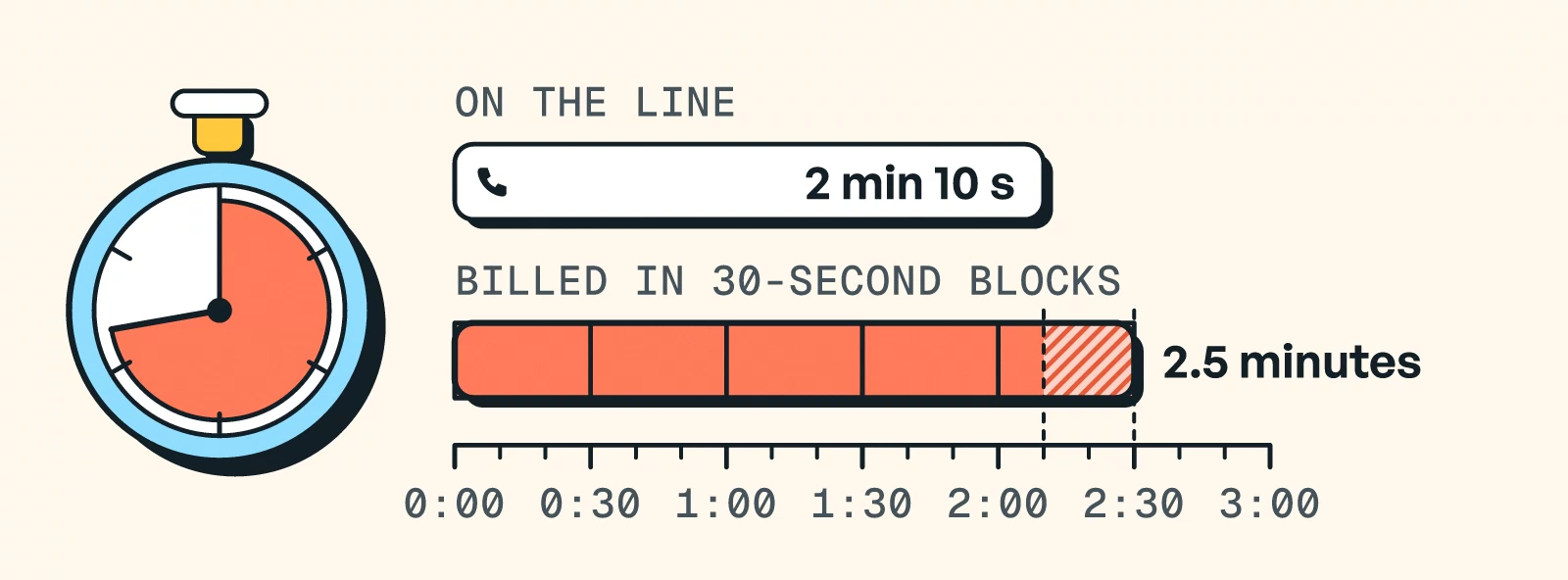
- Rounding. RingCentral rounds call time up and bills in 30-second blocks, so a 2-minute-10-second call is billed as 2.5 minutes.
- Spam and sales calls. On Smith.ai, every call the AI answers counts toward your quota by default. Its page says calls from more than 20 million known spammers are filtered out, and you can remove up to 10% of calls from each bill for other spam.
- Long talkers. A caller who wants to explain the whole leak costs you on a per-minute plan and nothing extra on a per-call plan.
Quo is the generous one on short calls: its pricing page says calls under 15 seconds don't use credits. Before you sign anything, look at one real week of your call log to get your call volume. Count the calls, and how many were robocalls, sales pitches and wrong numbers. If many of the rest are long calls, a per-call or per-caller plan protects you from them.
Is an AI receptionist for small business worth it?
It's worth it when the jobs it saves are worth more than the plan. That depends on three numbers only you have: how many calls you miss, how many answered calls become jobs, and what a job is worth.
The missed call calculator does that sum with your own numbers, no averages. It multiplies the enquiries you miss each week by how many answered ones become jobs and by your average job value.
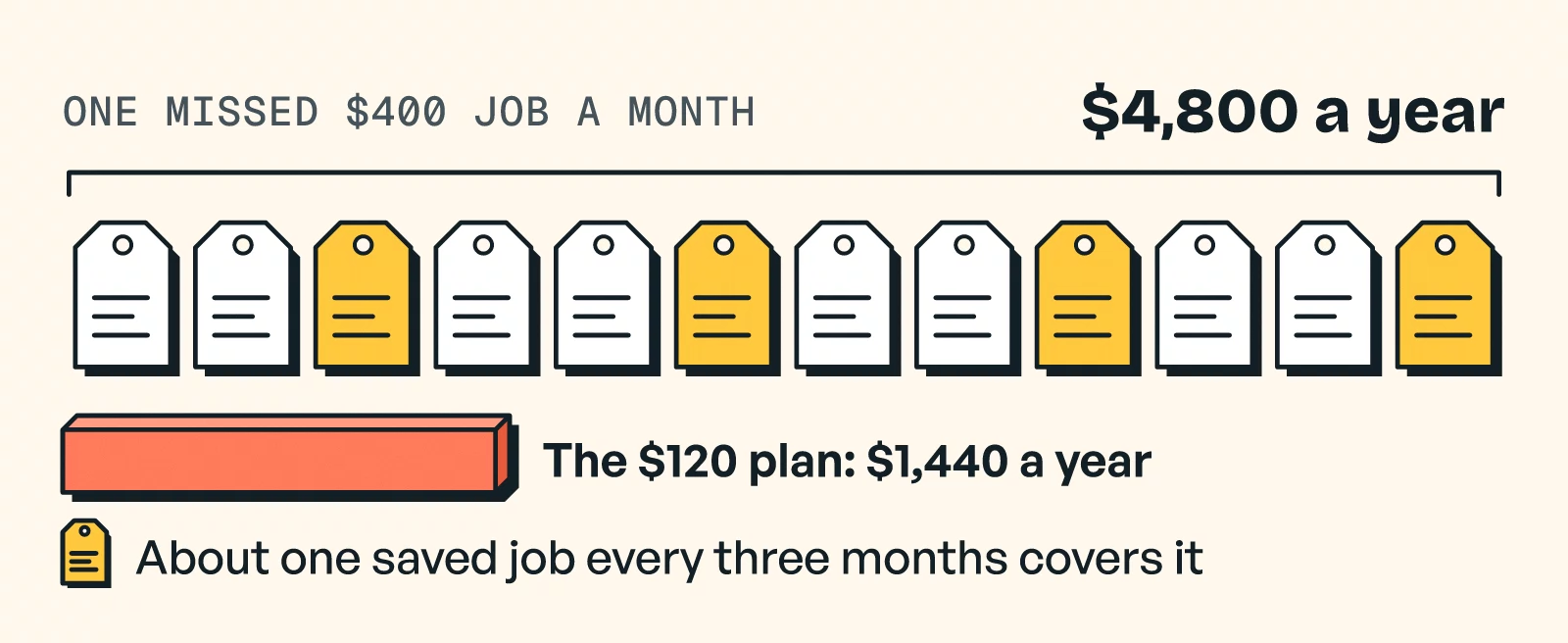
A worked example, not a client result: say a plan costs $120 a month, which is $1,440 a year. If one missed call a month would have become a $400 job, the calls you're missing are worth $4,800 a year. The plan pays for itself if it saves about one job every three months.
There's a catch the vendors leave out: that sum assumes callers book with a machine as often as with you. Some won't. AnswerConnect, which sells human answering, published a OnePoll survey of 6,000 people from May 2026 in which 79% said they "would choose a business with a human receptionist not AI". Read it knowing who paid for it, but don't assume every caller who reaches the AI turns into a job.
Which calls should an AI receptionist never take?
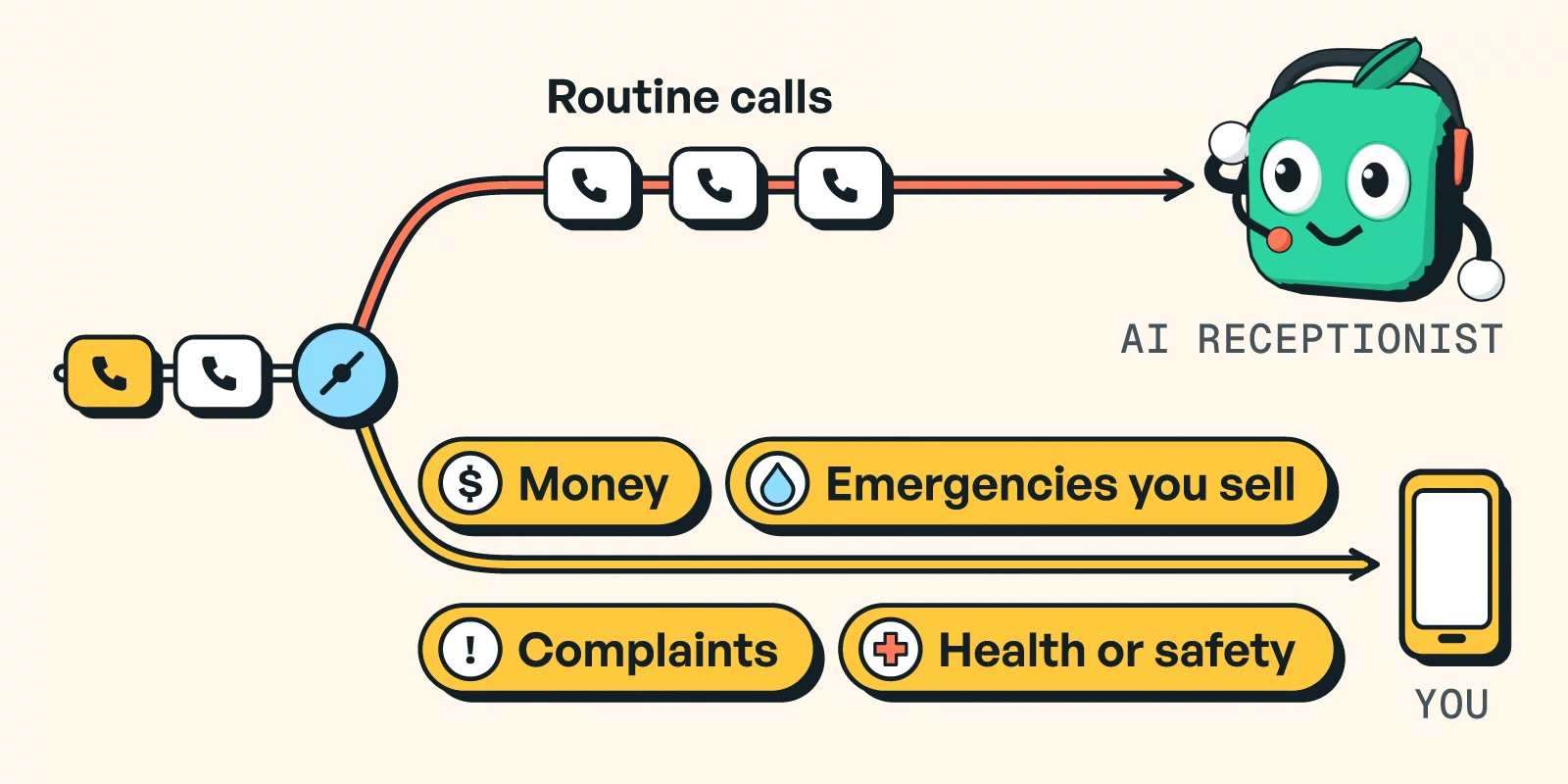
Some calls cost you more when a machine answers. Decide these before you switch it on, and set each one as a transfer rule or a straight-to-you number:
- Anything about money: refunds, disputed bills, payment problems.
- Complaints and frustrated callers: someone already annoyed gets more annoyed repeating themselves to a bot.
- Anything about health or safety: a clinic's patient with a symptom, a tenant who smells gas. Clinics should also ask any vendor in writing whether it will sign a HIPAA business associate agreement before patient calls go through it.
- Emergencies you sell: the burst pipe at 11pm or the HVAC call with the furnace out in January is a job you want, and it won't wait for a call back. Route it to a person, even if that person is you on call.
I give the same rule for website chatbots in the guide to AI chatbots for small business: the bot says it's a bot, keeps a person one step away, and sends refunds, complaints, anything about money or health, and any frustrated customer to a human.
Check that the plan you pick can do this. Smith.ai's page says a call that starts with the AI can be transferred to a live North America-based receptionist at any time. GoTo's page lists routing by time of day or department.
What a good hand-off to a person looks like
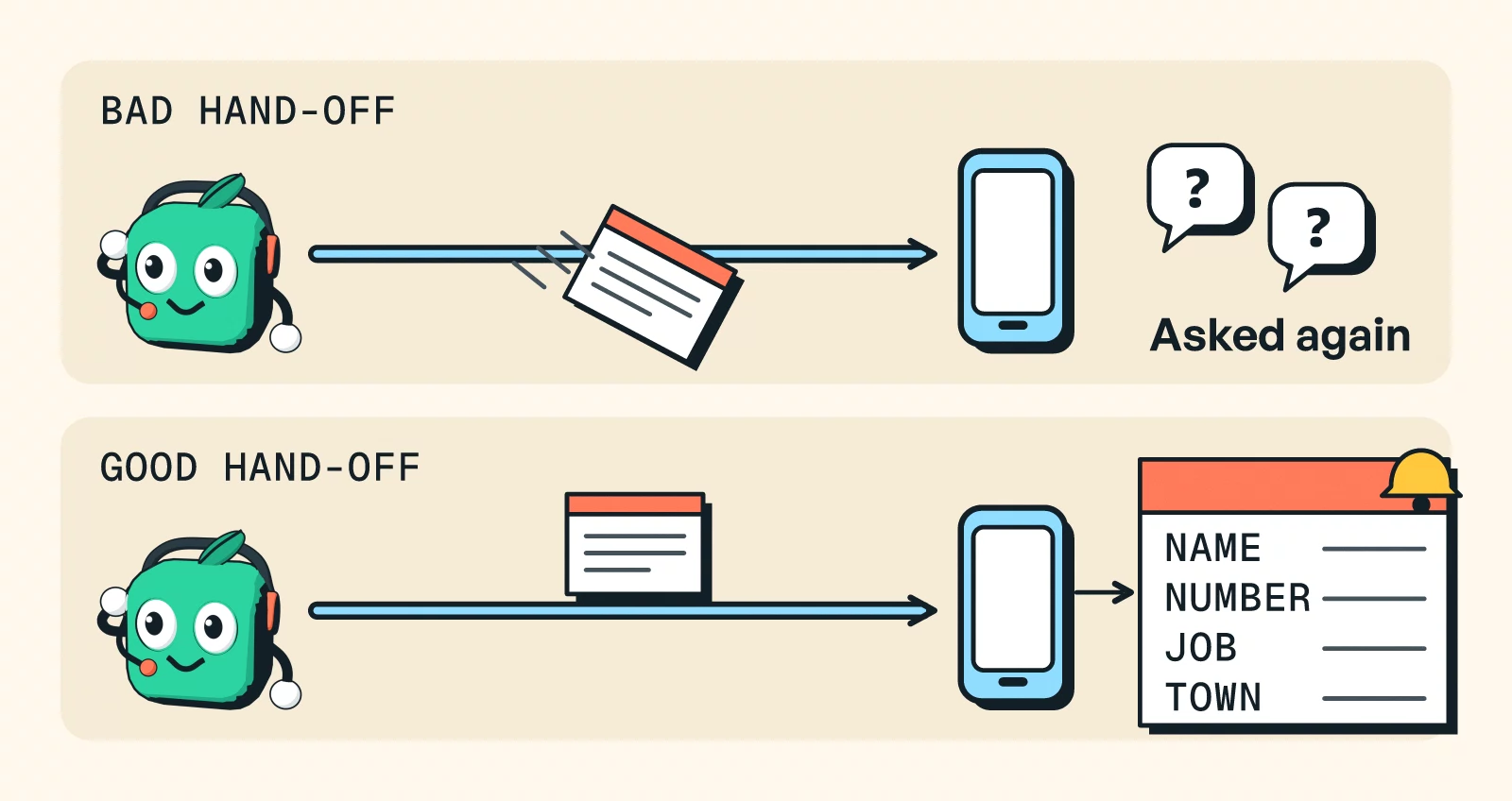
The bad hand-off goes like this: the AI takes every detail, transfers the call, and the person asks the same questions again. A good hand-off passes the summary along, so the caller never repeats themselves and your call back starts with what they need.
When you try a plan, call it yourself and check three things:
- Does the summary reach you as a text or an email within a minute, with the name, number, job and town?
- Does it land somewhere you already look, like your CRM or job list, not a separate app you'll forget?
- Is there a follow-up reminder, so a missed hand-off doesn't sit for two days?
I built MintLooks's own lead system to work this way: every brief from the site lands in HubSpot with a follow-up task due within a business day and an alert email, on free plans. The phone version should do the same: details in one place, and a reminder that won't let the call back slip.
Missed call text back: the cheaper fix
If your problem is calls you miss while your hands are full, you don't need anything to talk to the caller. A missed call text back sends an automatic text the moment you miss a call: "Sorry I missed you, I'm on a job. What do you need and where are you?" The customer gets a reply in seconds and you call back with the details.
It costs far less than an AI receptionist. Quo includes auto-replies to missed calls, texts and voicemails on every plan, starting at $19 per user a month billed monthly or $15 billed yearly (Quo pricing, checked November 23rd, 2026). Its AI agent, Sona, is included too, with 1,000 free credits a month, which is 10 calls.
What a plain auto-reply can't do is ask your questions, save the answers in one list and text you a summary. That's a small automation, and it's one MintLooks builds: a missed call, a website form or a new message sets it off, the customer gets a reply in your own words, it asks the two or three things you always ask, and you get one text with the details. It's a first automation, so it's priced to the steps it needs, and the phone or texting service is billed at cost on top. Start with the plain auto-reply if a fixed message is enough.
After hours answering service, AI or a text back: which fits?
| Missed call text back | AI receptionist | Live after hours answering service | |
|---|---|---|---|
| What the caller gets | An instant text, you call back | A voice that answers routine calls, asks questions, books or transfers | A person who answers and takes messages |
| Monthly cost (150-call example) | From $19 a month (Quo) | $79 to $270 a month | $1,725 (Ruby, 500 minutes) |
| Good for | Callers who'll wait a few minutes for you | Lots of calls, simple questions, bookings | Callers who won't talk to a machine |
| Watch out for | Callers who hang up without texting back | Emergencies, money and complaints (route them to a person) | The monthly bill and per-minute limits |
How to pick:
- You miss a few calls a day on the job: start with a missed call text back. It's the cheapest test, and your call log will show whether people answer the text.
- You get dozens of calls a day and most are the same three questions: an AI receptionist on a per-call or per-caller plan, with transfer rules for the calls in the list above.
- Your callers won't talk to a machine, or call upset or about health: a live answering service for small business, or an AI plan that can pass calls to a person, like Smith.ai's.
- The calculator says your missed calls are worth less than the plan: don't buy anything. Put your number on your Google listing with your hours and call people back fast.
If you can't tell which group you're in, run the cheapest test first. A month of the Quo text back costs $19, less than any AI plan in the table. If your call log shows callers ignore the text, or you spend the day answering the same three questions, that's the point where an AI plan earns its price.
Should I buy an AI receptionist or wait?
Start with one normal week of your call log and the missed call calculator. If the year's total is smaller than the plan, you're done. If it's bigger, try the cheapest option that fits from the table, and call it yourself at 9pm before your customers do.
If you want the text back that asks your questions and drops the answers in one list, the automation finder shows what it would involve for your business. Or send a brief telling me how your calls come in today (how many, when you miss them, what you ask every caller), and I'll come back with a fixed price.
Frequently asked questions
How much does an AI receptionist cost per month?
On six plans checked November 23rd, 2026, from $79 to $270 a month for 150 calls; entry plans start at $24.95 ([Upfirst](https://upfirst.ai/pricing), 30 calls) and $49 (Rosie and RingCentral).
Is there a free AI receptionist?
Smith.ai has a free plan with 25 real calls a month, and Quo includes 1,000 credits a month (10 AI-answered calls) on its paid phone plans.
Is an AI receptionist worth it for a small business?
Only if the jobs it saves are worth more than the plan; put your own numbers into the missed call calculator before you buy.
Can an AI receptionist use my existing business number?
Usually yes, through call forwarding; RingCentral says its AI Receptionist works with any business phone system by forwarding or SIP.
What is the difference between an AI receptionist and an answering service?
An answering service uses live people and bills by the minute ([Ruby](https://www.ruby.com/pricing/): $250 for 50 minutes), while an AI receptionist answers by software: in the 150-call example, $11.50 a call on Ruby against $0.53 to $1.80 on the six AI plans.

Written by
Taegan MurphyFounder, MintLooks
Taegan builds production web apps and AI integrations, including MCP servers, AI agents and automated workflows, for businesses that want software that does real work. MintLooks is the studio behind that work.
Or read how we approach it: AI automation services
Keep reading
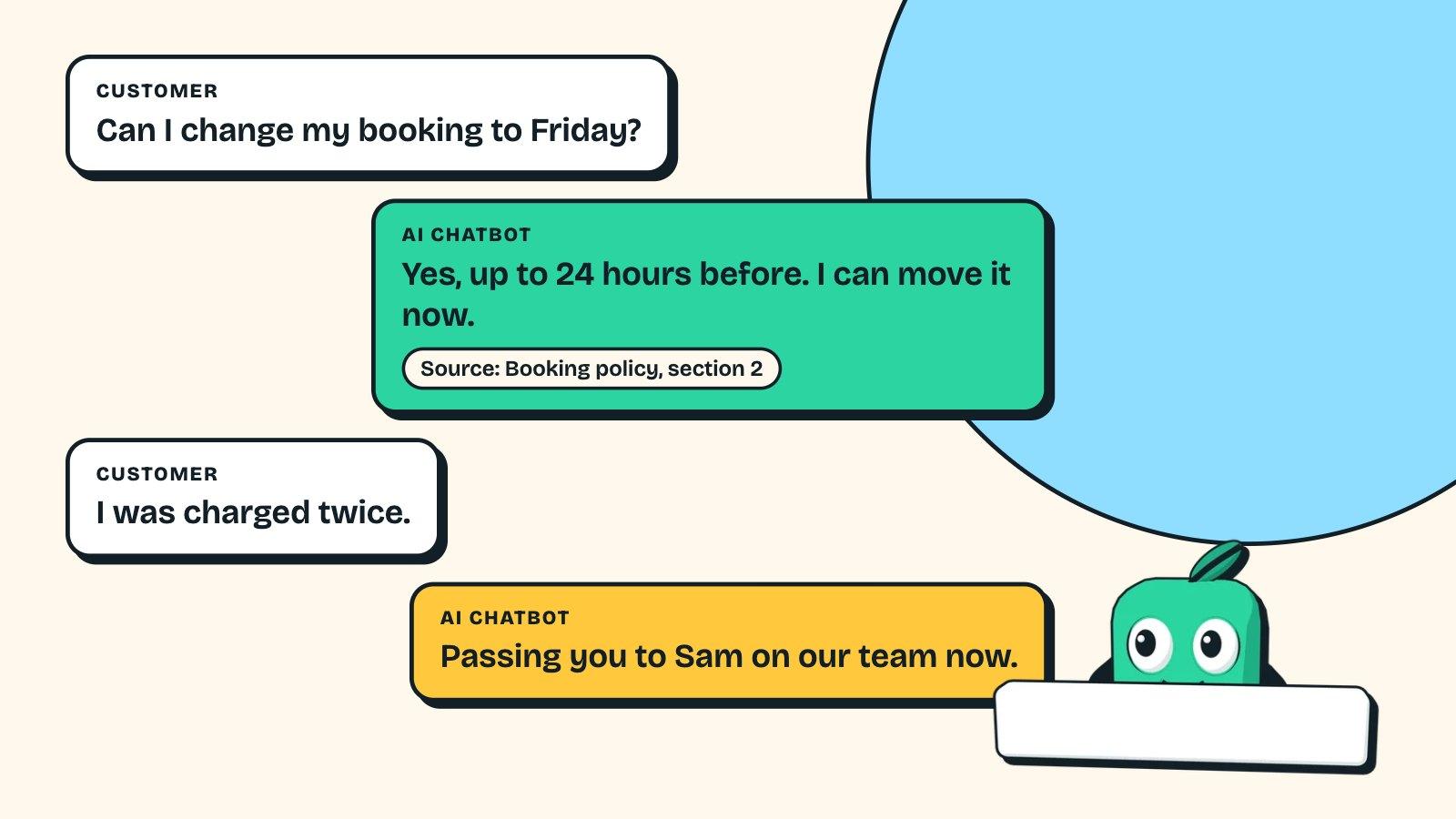
AI Chatbot for Small Business Customer Service: Buy or Build?
Choosing an AI chatbot for small business customer service: real prices for Intercom, Tidio, Zendesk and more, when a custom bot on your docs is worth it.
· 8 min read
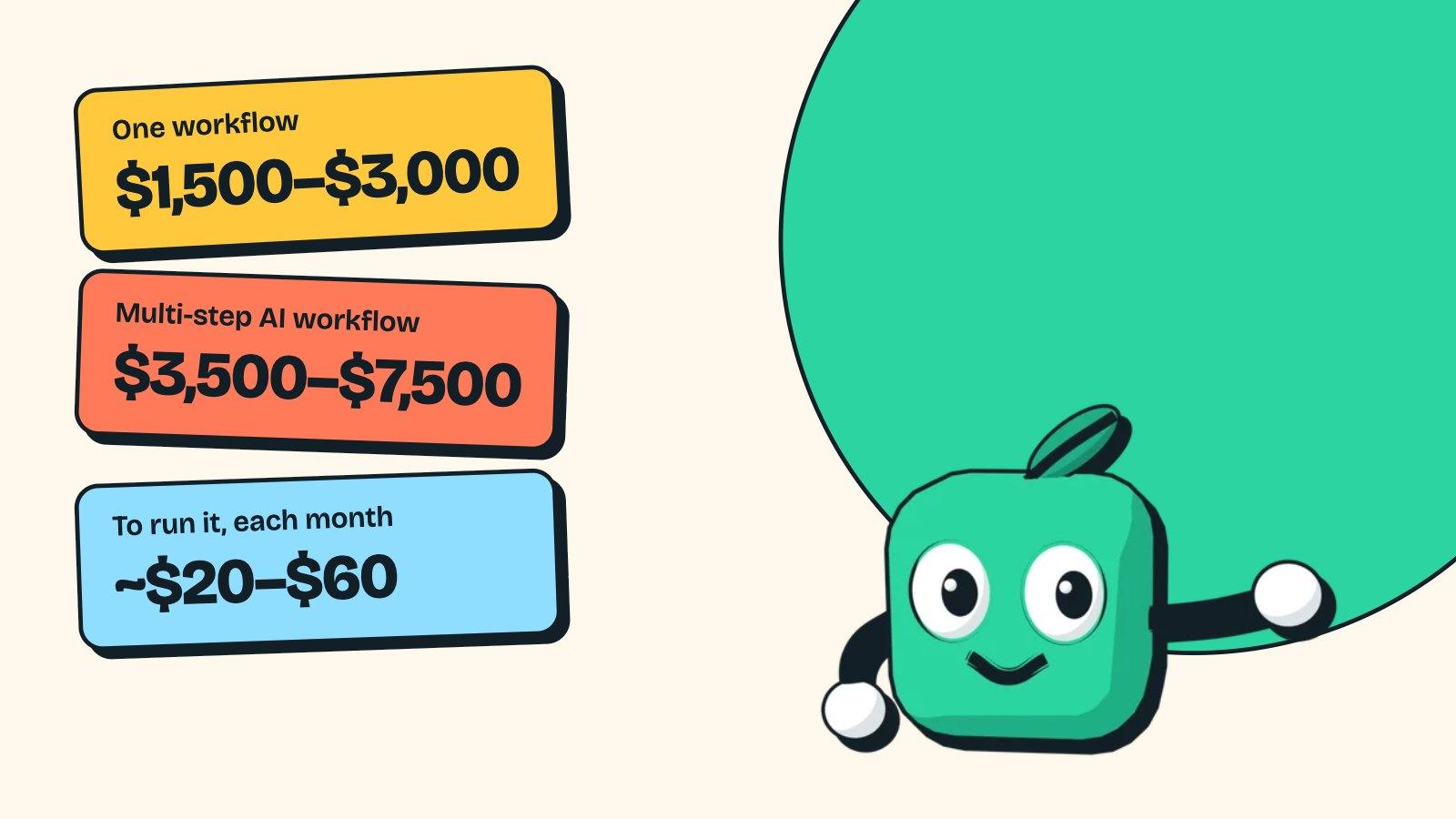
How Much Does AI Automation Cost? Real Prices for Small Businesses
AI automation cost for small businesses: $1,500–$3,000 per workflow, $3,500–$7,500 for multi-step AI, about $20–$60 a month to run. Pricing and payback math.
· 11 min read
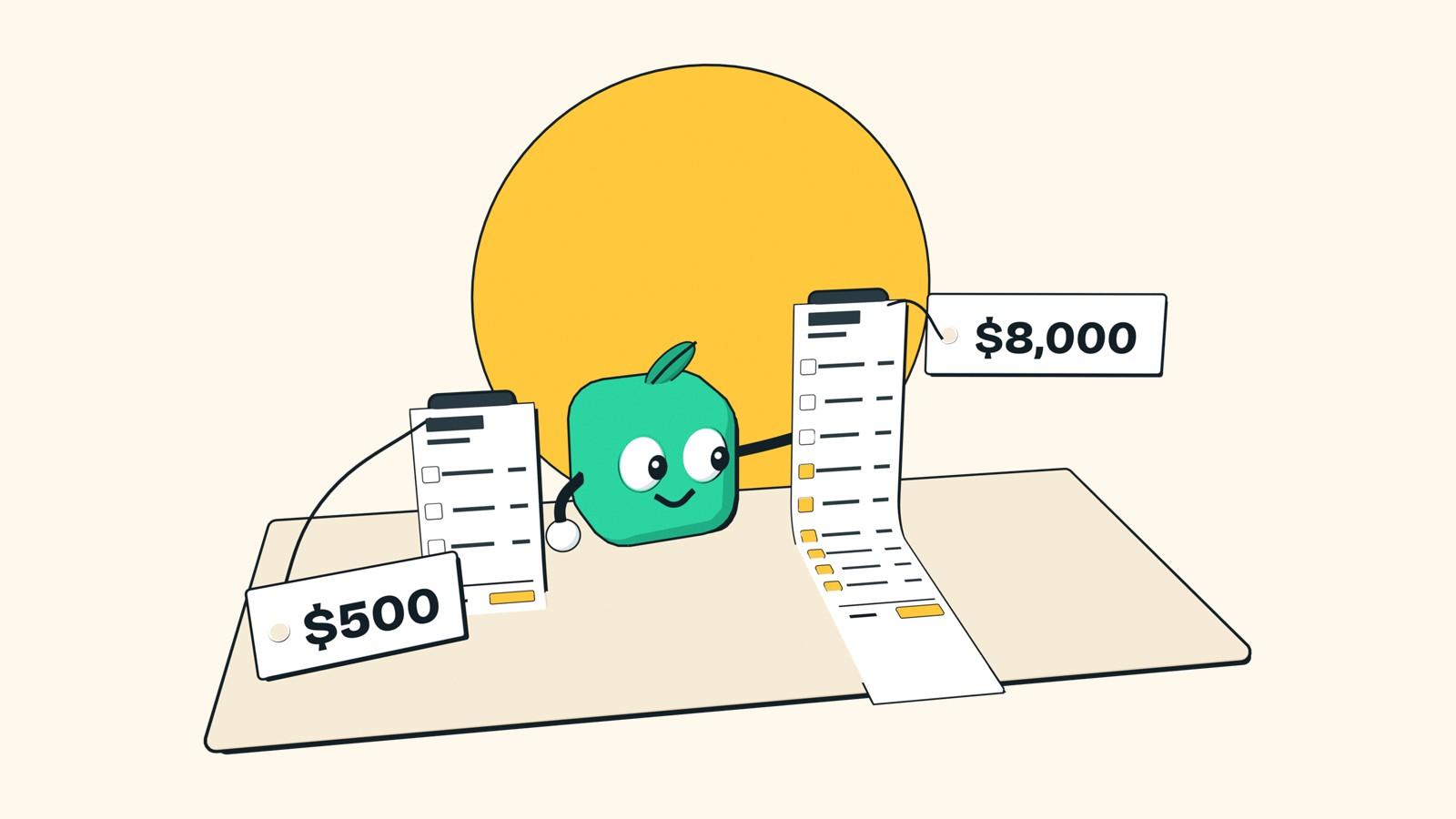
Quoted $500 and $8,000 for the Same Website? Small Business Website Cost, Explained
Small business website cost in 2026: $228 to $348 a year on a builder, $1,500 to $8,000 freelance, $6,000+ agency, plus 3-year totals and the monthly bills.
· 14 min read
 Lead Generation